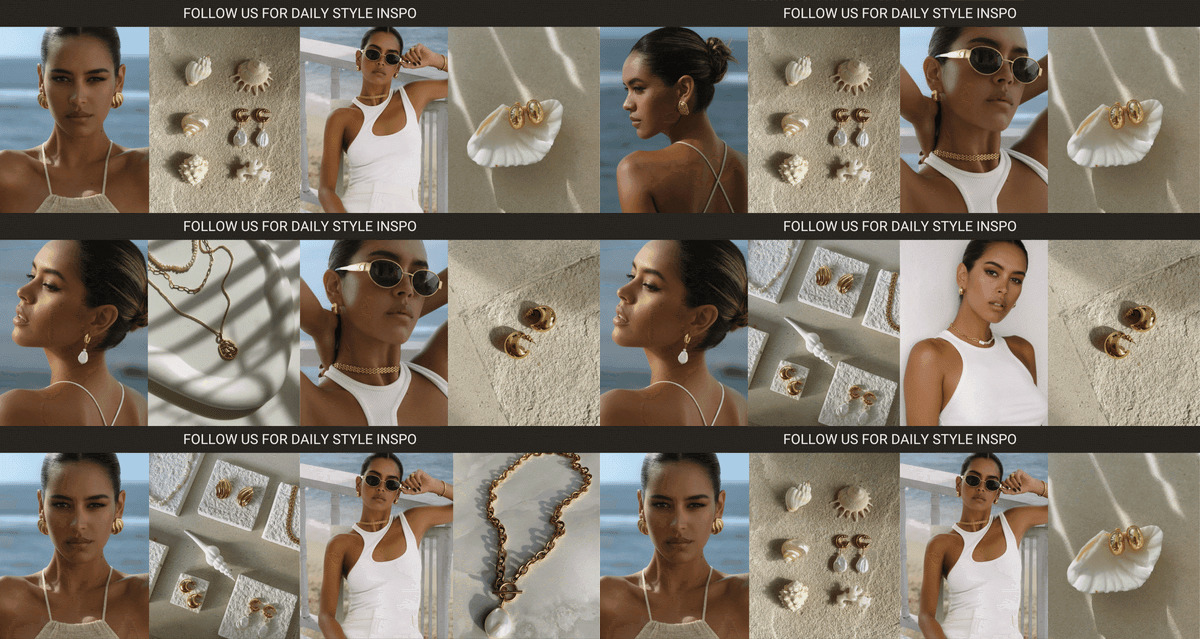

I used to think all pearls look the same. Then I started working in jewelry and realized that's a lie bigger than "I'll just have one glass of wine." The truth is, there's a world of difference between a real pearl necklace and the plastic-y, too-perfect imposters you'll find at the mall. And once you know what to look for, you'll never be fooled again.
So if you've ever held a pearl necklace and wondered "wait, is this even real?", you will find all the answers here on how exactly you can tell.

The Surface Test: Smooth vs. Slightly Imperfect
Here's the thing nobody tells you: real pearls are not perfect. They have tiny ridges, slight irregularities, maybe a little shimmer variation from bead to bead. That's literally the whole point. A pearl is grown by a living oyster, not stamped out in a factory, so no two are exactly alike.
Fake pearls are suspiciously flawless. Same size, same shine, same everything. If your "pearls" look like they were cloned, that's your first red flag.

The Tooth Test (Yes, Really)
There is this old school trick that I still use from time to time. Take the strand and very gently rub one of the pearls against the edge of your front tooth.
If it feels completely smooth, glassy, or slippery? Congratulations, you are holding a piece of plastic or painted glass. If it feels slightly gritty, textured, or like fine sandpaper? That is the real deal. Genuine pearls are organic gems grown inside oysters and mussels, that texture comes from the nacre, the natural mineral layers that build up on a cultured pearl necklace over time. That natural texture is impossible for a machine to replicate.
I know it feels weird to gnaw on your jewelry in public, but a quick discreet test can save you from dropping money on something that isn't what it claims to be.


Weight Doesn't Lie
Pick the necklace up and really feel it in your hand. Real pearls, especially freshwater pearl necklaces, have a satisfying heaviness to them. They're dense, substantial, the kind of weight that makes a necklace feel expensive the second you put it on.
Fake pearls are noticeably lighter, almost hollow-feeling. If a "pearl" necklace feels like it could float away in a light breeze, that's not a great sign.


Color Variation Is a Good Thing
This might be the most counterintuitive tip on this list: if every single pearl on your necklace is the exact same shade of white, be suspicious. Real pearls, particularly baroque pearl necklaces with their irregular shapes, naturally show subtle variations in color and tone. You'll spot soft creams, pale pinks, the occasional silvery undertone, sometimes all on the same strand.
Mass-produced fakes are dyed or coated to match perfectly, which sounds nice in theory but is actually a dead giveaway once you know what you're looking at. Nature doesn't do uniform, and that's exactly why I love it.


The Drill Hole Tells the Truth
This trick feels very insider-fashion-editor, but it works.
Look closely where the string passes through the pearl. On a modern pearl necklace made with the real pearls, the drill hole tends to be slightly off-center or a touch rough around the edges, because, again, it's a natural material being worked by hand. On man-made pearls, the hole is laser-precise and perfectly centered every time, since it's manufactured to be perfect.
It's a small detail, but it's one of the most reliable ways to spot the difference if you're shopping secondhand or vintage and want to know what you're actually getting.


Why This Actually Matters
I'm not saying this to be a jewelry snob about it (okay, maybe a little). Real pearls hold their luster for decades if you take care of them, while fake ones tend to chip, peel, or yellow embarrassingly fast. You're not just paying for the look, you're paying for something that'll actually last past a few wears.
At Cult of Sun, every single pearl piece we make uses real, cultured freshwater pearls. No glass, no plastic, no mass production. We love using real pearls and think that they worth the investment.
Next time you're shopping, you'll know exactly what to check for. Your jewelry box (and your future self) will thank you.


Want to learn more about the latest jewelry trends and styling? Check out these posts:
How to Choose a Chunky Necklace That Actually Looks Chic, Not Cheap
Insider Tips: How to Choose a Pearl Choker Necklace That Doesn't Look Dated
3 Trendy Beaded Necklaces That Still Look Chic in the City